por
por Introduction
Today, a business does not compete only on price or product quality. It competes on customer experience, speed, and responsiveness. That is why understanding CRM software has become essential for modern companies.
A CRM is not simply a customer database. It is a strategic tool that helps organize information, automate tasks, improve internal communication, and make smarter business decisions. When implemented correctly, CRM software can completely change the way a company sells, supports, and retains customers.
In this article, I will explain what CRM software is, what it is used for, its real benefits, how to choose the best solution for your business, and why it can become one of the most valuable investments for sustainable growth.
What Is CRM Software?
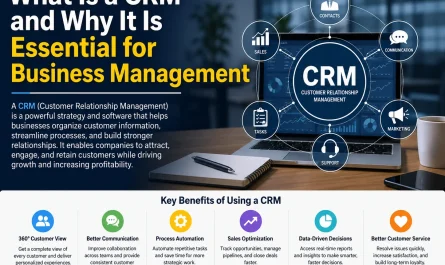
CRM software, or Customer Relationship Management software, is a platform designed to manage the relationship between a company and its customers in a centralized, organized, and strategic way.
In simple terms, a CRM brings together all the important information about each customer or prospect in one place. This includes contact details, purchase history, previous conversations, sales opportunities, support requests, and much more.
The biggest difference between CRM software and a regular spreadsheet or notebook is that CRM does not just store information—it helps you use it intelligently.
I usually explain it this way: CRM is not only about saving names; it is about understanding people, anticipating needs, and building stronger business relationships.
Contenido Relacionado:
The History and Future of CRM: How Customer Relationship Management Evolved
What Is CRM Software Used For?
The main purpose of CRM software is to improve how a company manages customer relationships throughout the entire sales cycle.
This includes everything from the first contact to post-sale support. Its role goes far beyond having a simple customer list. A well-used CRM helps businesses work with more clarity and less guesswork.
Customer and Lead Organization
A CRM allows businesses to keep all contacts in one platform, without relying on scattered files, emails, or handwritten notes.
Sales Tracking
It helps monitor where each sales opportunity stands. This way, the sales team knows who needs a follow-up call, who requested a proposal, and who is ready to close.
Task Automation
Many repetitive actions can be automated, such as follow-up emails, reminders, task assignments, and internal alerts.
Better Customer Service
When support and sales teams have access to a complete customer history, responses become faster, more accurate, and much more personalized.
Data Analysis
A CRM also allows businesses to measure performance. This means you can clearly identify what is working, what is not, and where strategic improvements are needed.
Why CRM Software Is So Important Today
A few years ago, many businesses could manage customers using Excel or even paper records. Today, that is no longer enough.
The modern market demands speed, personalization, and strong responsiveness. Customers expect businesses to remember them, understand them, and communicate at the right moment. That is only possible when there is a system that centralizes information and organizes operations.
What Changes With a Well-Implemented CRM
- Sales teams work with more focus
- Managers make decisions based on data
- Customers receive more personalized attention
- Companies reduce mistakes and repeated work
- Communication between departments improves
In other words, CRM software does not just organize processes—it improves the way a business thinks and operates.
What CRM Software Does in Practice
A CRM solves everyday problems that slow down business growth.
Centralizes All Information
Instead of having customer data spread across emails, WhatsApp, spreadsheets, and personal notes, CRM stores everything in one secure place.
Records Every Interaction
Every call, email, meeting, or message is saved so authorized team members can review the full customer history.
Makes Segmentation Easier
Not all customers are the same. A CRM helps classify them by interest, location, buying stage, behavior, or priority level.
Organizes the Sales Funnel
It helps visualize the entire sales process from start to finish, making it easier to identify where opportunities are being lost.
Supports Automation
Manual work is reduced, freeing up time for higher-value activities like selling and building stronger customer relationships.
Benefits of Using CRM Software
A strong CRM system is not just another business expense. It is a tool that can generate real return when used strategically.
Improves Customer Satisfaction
When you understand a customer’s history, you can respond more accurately and provide a more personalized experience.
And trust always improves sales.
Increases Sales
A CRM helps identify opportunities, maintain proper follow-up, and prevent valuable leads from being lost due to poor management.
Boosts Productivity
By automating repetitive tasks, teams gain more time to focus on the activities that truly drive business growth.
Improves Decision-Making
Reports and dashboards provide a clear view of sales performance. Decisions stop being based on intuition and start being based on real numbers.
Strengthens Customer Retention
With more organized and personalized service, it becomes easier to build long-term customer loyalty.
How to Choose the Right CRM Software
Choosing the right CRM software should not be based only on popularity or price. It should be based on your business needs.
Define Your Goals
Ask yourself: What do I want to improve?
Do you need better sales tracking? Stronger customer service? Marketing automation? Clear goals make the decision easier.
Consider Your Budget
CRM solutions vary greatly in price. The goal is not to find the cheapest one, but the one that creates the best value.
Think About Company Size
Some CRM platforms are designed for startups, while others are built for large enterprises. Choose one that fits your current stage and future growth.
Prioritize Ease of Use
If your team finds the system too difficult, they simply will not use it.
A CRM should simplify work, not create more confusion.
Evaluate Customer Support
Good support can make a huge difference, especially during implementation and training.
A powerful system without support often becomes an expensive problem.
Additional Tips for Successful CRM Implementation
Buying CRM software is only the first step. Real success comes from proper implementation.
Start Gradually
Begin with the core features first. Then add more advanced functions as your team becomes comfortable with the system.
Train Your Team
It is essential that employees understand how to use the CRM correctly so they can take full advantage of its capabilities.
Measure Results
Track how the CRM impacts sales, customer satisfaction, and internal productivity. Make adjustments when needed.
Stay Consistent
CRM success does not happen overnight. It requires discipline, consistency, and a clear strategy.
But the long-term value is worth it.
Final Thoughts
CRM software is one of the most powerful tools a business can use to improve customer relationships, increase sales, and grow with structure and intelligence.
It helps centralize information, automate processes, improve customer satisfaction, and support better decision-making.
The companies that grow sustainably are usually not the ones that sell the most today—they are the ones that manage relationships the best over time.
If your business is still relying on spreadsheets or disconnected systems, now may be the perfect time to upgrade.
Because understanding your customers better will always be one of the smartest investments you can make.